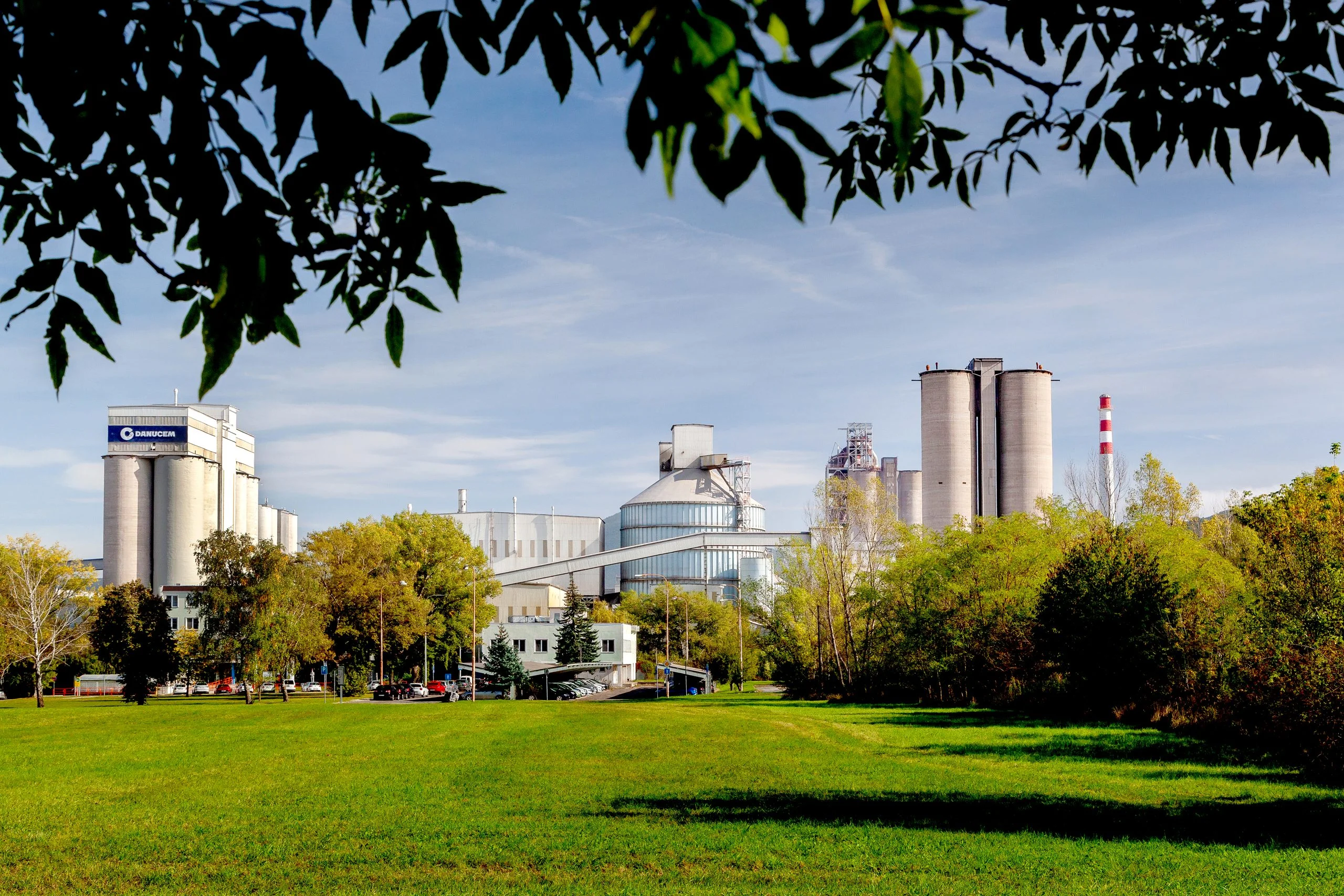
Extraction of limestone and clay in quarries. Primary crushing and grinding of raw materials into raw flour. Some of the natural raw materials are replaced by alternative materials (e.g. blast furnace slag, construction waste)
Preheating of raw material flour in the exchanger tower. Entry to a rotating furnace at temperatures of up to 1,450 °C (with white cement up to 1,700 °C). Creation of slink – an intermediary product of cement.
Combustion of alternative fuels instead of fossil fuels. Reducing CO₂ emissions and use of modern filters. Constant emissions monitoring.
Cooling and storing slink. Grinding the slink with other components into a fine powder. Storing the cement in silos, packaged in bags or expedition via cisterns.
In the Rohožník cement plant, up to 18% of electricity is generated from waste heat.
Waste heat is used in the crystallization of technical salts.