

At Danucem, we realize that even industrial sites can be important refuges for nature. Proof of this is our quarry in Čachtice, where we have managed to create more favorable conditions for rare species of plants and animals—including the unique Slovak blue butterfly (Phengaris slovacus), whose name suggests that it is found nowhere else in the world.
Nature needs space – and light
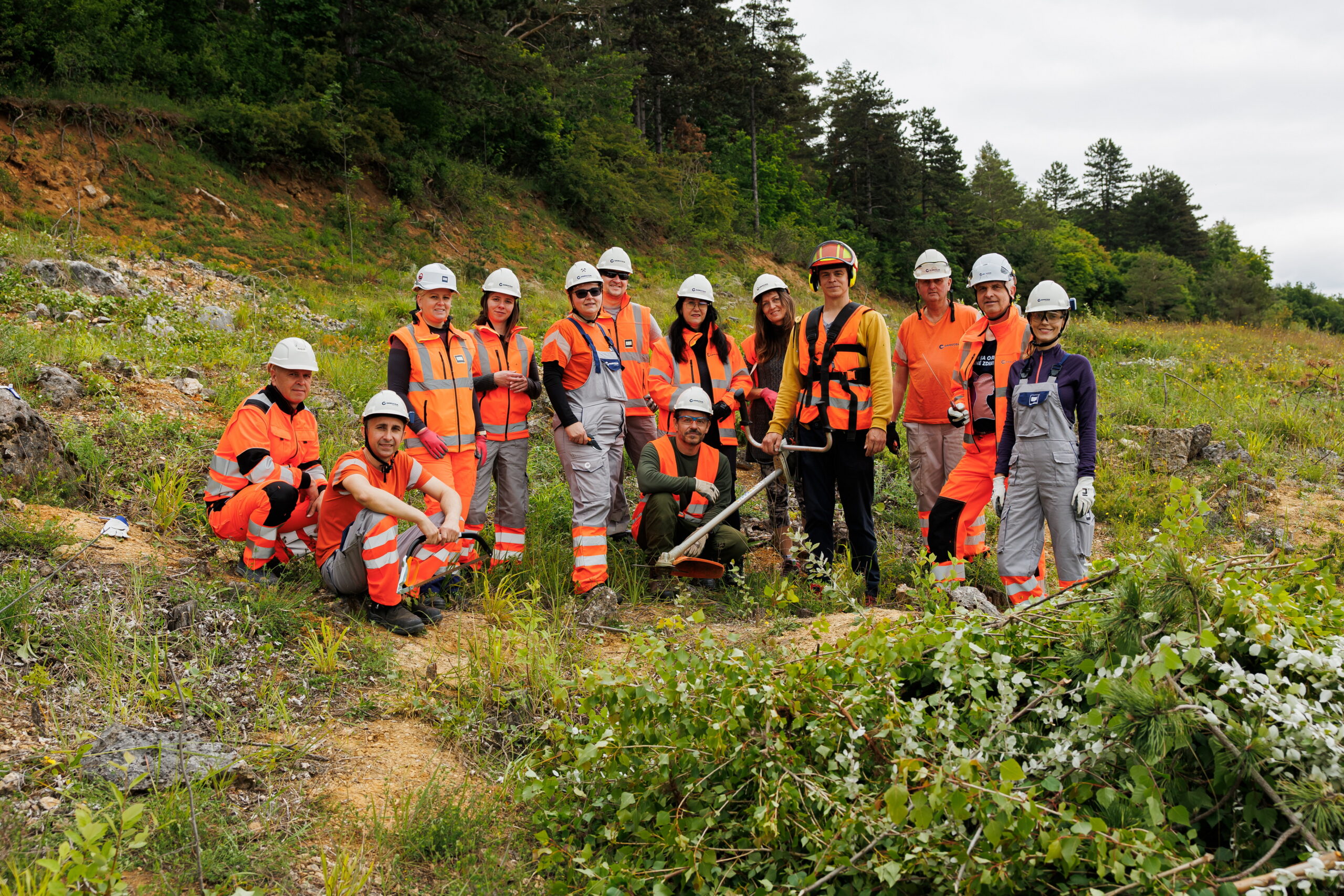
During a recent joint event, we focused on removing self-sown shrubs that have begun to shade the original meadow vegetation in recent years. Although these shrubs may seem inconspicuous at first glance, they actually prevent the growth of low herbs and flowers that are crucial for many insect species, including blue butterflies.
Why are blue butterflies so special?
Blue butterflies are small but extremely sensitive butterflies that need specific conditions to survive. Their larvae are often tied to specific plant species and even to symbiosis with certain species of ants. Several species of blue butterflies can be found in the Čachtice quarry, but the rarest is the Slovak blue butterfly – an endemic species that lives in only a few locations in Slovakia.
🦋 Did you know that…
Blue butterflies live in a unique symbiosis with ants! After hatching, their caterpillars are carried to anthills, where ants protect and feed them in exchange for the sweet secretions that the larvae excrete. This fascinating relationship is fragile and depends on the presence of specific ant species, which makes blue butterflies extremely sensitive to changes in the environment.
Results that make sense
By removing the shrubs, we opened up the area to sunlight, which is essential for the growth of meadow flowers. In doing so, we supported the return of native plant communities and created more suitable conditions for butterflies, bees, and other pollinators. Such interventions are an important part of ecological restoration and show that life can flourish even in a quarry.
Thank you to everyone who participated
This activity would not have been possible without the enthusiasm and cooperation of our colleagues, volunteers, and nature conservation experts. Special thanks go to the BROZ (Bratislava Regional Conservation Association) and Tomáš Olšovský, whose expert guidance and long-term efforts in butterfly conservation were key to the success of this initiative.
Together, we have shown that even small steps can make a big difference to biodiversity conservation.